ICLR 2027 Submission
Demo Page
Contents
- Rebuttal — supplementary results for the responses
- By reviewer: r1hr · hmxL · Rmu9
- By section: 1 Human study · 2 Audio separation · 3 Updated judge · 4 Paired tests for the ablation · 5 Reference frame · 6 Zero-shot performance · 7 InstructAV2AV fine-tuned on our data · 8 Prompts given to each method · 9 Split by YouTube id; rare and unseen objects · 10 Other prompts · 11 Backbone · References
- Dataset
- Best results
- Comparison with unimodal editing baselines
- Comparison with joint audio-visual editing baselines
- More examples
- Failure cases
All clips are 5 s, 256×256, 16 fps. Every example comes from the held-out test set; the tag on each card (R = removal, A = addition, D = dataset, F = failure) identifies it across sections. Input is what a method receives, Reference is the ground-truth edit.
Rebuttal
Supplementary results for the responses: full tables, protocols and examples that the responses point to. Each section is tagged with the reviewer weakness (W) / question (Q) it answers, in the numbering of each response; the index below goes from each reviewer's points to the sections. Everything below this section is unchanged from the original submission; the numbering of sections 1–6 is kept so that references in the paper and the responses still match.
Reviewer r1hr
W3: §7 InstructAV2AV fine-tuned on our data, §9 Split by YouTube id; rare and unseen objects
Q1: §1 Human study, §2 Audio separation
Q2: §3 Updated judge
Q3: §5 Reference frame
Reviewer hmxL
W1: §1 Human study
W2: §3 Updated judge
W3: §5 Reference frame, §6 Zero-shot performance
Q1: §1 Human study, §2 Audio separation
Q2: §3 Updated judge, §4 Paired tests for the ablation
Q3: §7 InstructAV2AV fine-tuned on our data, §8 Prompts given to each method
Reviewer Rmu9
W1: §4 Paired tests for the ablation
W2: §7 InstructAV2AV fine-tuned on our data
W3: §1 Human study, §2 Audio separation
W4: §10 Other prompts
Q1: §7 InstructAV2AV fine-tuned on our data
Q2: §6 Zero-shot performance
Q3: §11 Backbone
Definitions. Core success means that, on one clip, the target is removed / added both visually and acoustically, the unrelated visual and audio content is preserved, and there is no major artifact. Confidence intervals are 95 % cluster bootstrap over source videos. Paired tests are exact McNemar. Pseudo-target is the reference output built by our data pipeline (called “oracle” in parts of the submission).
1. Human study r1hr Q1 · hmxL W1, Q1 · Rmu9 W3
Protocol. We collected 11 questionnaires from 10 raters. Each screen shows the source clip, the instruction and one anonymised output; the order is shuffled per rater and the raters do not know which system produced an output. For each output they answer:
- Is the object visually removed / added?
- Is its sound removed / added?
- Is the visual background preserved?
- Are the other sounds preserved?
- Visual artifact: none / minor / major.
- Audio artifact: none / minor / major.
Questions 1–4 are answered Pass / Fail / Uncertain. We report the percentage of ratings that are not Pass. Core success = Pass on 1–4 and no major artifact.
Pseudo-targets and our outputs.
| % of ratings | removal: pseudo-target | removal: ours | addition: pseudo-target | addition: ours |
|---|---|---|---|---|
| sound edit fails | 72.7 | 70.0 | 7.4 | 40.9 |
| visual edit fails | 21.8 | 52.0 | 1.9 | 18.2 |
| visual background damaged | 27.3 | 42.0 | 1.9 | 20.5 |
| other sounds damaged | 25.5 | 14.0 | 1.9 | 15.9 |
| major artifact | 32.7 | 48.0 | 7.4 | 31.8 |
| core success [95 % CI] | 16.4 [5, 29] | 14.0 [2, 27] | 83.3 [69, 95] | 40.9 [23, 57] |
Addition pseudo-targets are reliable. For removal pseudo-targets, three of the four checks pass in 73–78 % of ratings; the weak point is the sound, which is not removed in 72.7 % of ratings. On the full test set the judge gives the same picture: the sound is not removed in 81.7 % of removal pseudo-targets.
2. Audio separation: our pipeline against other methods r1hr Q1 · hmxL Q1 · Rmu9 W3
To test whether incomplete sound removal is specific to our pipeline, we paired the same pseudo-target video with removal audio from other methods (200 test clips, updated judge). Audio success = target sound removed, other sounds kept, no major audio artifact.
| removal audio from | sound removed % | other sounds kept % | audio success % |
|---|---|---|---|
| our pseudo-target (SAM-Audio with best-of-seed selection) | 21.0 | 84.5 | 16.0 |
| SAM-Audio [3], single pass | 25.5 | 72.5 | 17.0 |
| CoherentAVEdit [4] | 7.5 | 74.5 | 4.5 |
| AUDIT [5] | 44.5 | 9.0 | 1.0 |
| ZEUS [6] | 4.5 | 86.0 | 2.5 |
| no separation (source audio) | 0.5 | 99.5 | 0.5 |
Our pseudo-targets are on par with single-pass SAM-Audio on audio success and keep the other sounds better (+12 pp, p = 0.002). They are significantly better than the three audio editors (p < 0.001 each). Incomplete sound removal is therefore a limit of current audio separation.
Verified subset. We will release a per-clip “verified” flag for the 261 test clips whose pseudo-target passes the sound check, and report removal on this subset. On it, our model removes the sound in 38.7 % of clips (11.5 % on the other clips), against 20.7 % for InstructAV2AV (p < 0.001) and 11.5 % for CoherentAVEdit.
3. Updated judge r1hr Q2 · hmxL W2, Q2
The judge is updated to the new Gemini model. It now receives the source clip together with the edited clip (and the reference frame for addition), and answers the same six questions as the raters. For consistency it first decides whether the clip contains a checkable audio-visual event.
Why a checkable event matters. Synchronisation can only be judged when the clip contains an event that is both seen and heard at an identifiable moment, such as a dog barking or a hammer striking. A clip with only continuous ambient sound has nothing to check. In the submission such clips counted as consistent, and they accounted for 55–82 % of the “Yes” verdicts. The updated judge reports them separately, and they never count as synchronised.
Full test set (1,425 clips).
| task | system | core success % | has checkable event % | synchronised, among checkable % | core success and verified consistency % |
|---|---|---|---|---|---|
| removal | pseudo-target | 4.8 | 69.1 | 11.0 | 0.7 |
| removal | Ours | 0.9 | 71.7 | 19.7 | 0.0 |
| removal | InstructAV2AV | 1.1 | 82.9 | 30.6 | 0.1 |
| removal | AVI-Edit (pseudo-target audio given) | 0.0 | 82.0 | 46.5 | 0.0 |
| addition | pseudo-target | 43.6 | 95.9 | 89.5 | 41.4 |
| addition | Ours | 5.5 | 87.7 | 35.4 | 5.0 |
| addition | InstructAV2AV | 2.4 | 89.5 | 17.7 | 1.8 |
| addition | CoherentAVEdit (pseudo-target video given) | 37.4 | 93.9 | 82.1 | 35.5 |
Consistency is reported together with core success because on its own it rewards leaving the clip unchanged: AVI-Edit has the highest consistency on removal but edits the object in only 9 % of clips.
Degraded cross-attention outputs (AVIO-XAttn). In the submission these outputs scored above the main model (removal VES 68 vs 40). Under the updated judge they receive visual preservation 1 %, major artifact 100 % and core success 0 %.
Agreement with the raters (86 rated outputs; human label = strict majority of the raters, ties dropped):
| question | κ removal / addition | raw agreement % removal / addition | judge passes an output the raters fail, % removal / addition |
|---|---|---|---|
| visual edit | 0.60 / 0.29 | 80 / 74 | 18 / 0 |
| acoustic edit | 0.52 / 0.32 | 82 / 74 | 10 / 33 |
| visual preservation | 0.70 / 0.27 | 85 / 82 | 7 / 50 |
| major visual artifact | 0.80 / 0.27 | 90 / 80 | 0 / 33 |
| core success | 0.63 / 0.42 | 93 / 70 | 3 / 12 |
The judge agrees well with the raters on removal. On addition it is stricter than the raters: it passes 67 % of the visual additions where the raters pass 92 %. Its errors are mostly missed successes; it rarely passes an output that the raters fail.
The raters also confirm the pattern of the submission’s Table 1(c): for removal pseudo-targets the object is visually removed far more often than its sound (raters 78 % vs 27 %; Table 1(c) VES 55.4 % vs AES 11.1 %).
The raters did not label consistency, so the consistency columns come from the judge only. Agreement between raters on audio-artifact severity is low, so audio quality is reported with FAD / KL / LSD.
4. Paired tests for the ablation hmxL Q2 · Rmu9 W1
Same 200 test clips, updated judge, each variant against the main model on the same clip. Every difference against the cross-attention variant is significant (p < 0.001); removing the reference frame costs the visual addition but not the acoustic one.
| comparison | task | measure | main model % | variant % | difference [95 % CI] | McNemar p |
|---|---|---|---|---|---|---|
| main model without the reference frame | addition | object added visually | 18.0 | 0.5 | −17.5 pp [−22.9, −12.4] | < 0.001 |
| main model without the reference frame | addition | sound added | 33.0 | 29.5 | −3.5 pp (CI includes 0) | not significant |
| cross-attention conditioning | addition | background preserved | 45.5 | 3.0 | −42.5 pp [−49.5, −35.5] | < 0.001 |
| cross-attention conditioning | addition | core success | 6.0 | 0.0 | −6.0 pp [−9.5, −3.0] | < 0.001 |
| cross-attention conditioning | removal | background preserved | 27.0 | 2.0 | −25.0 pp [−31.2, −19.1] | < 0.001 |
| cross-attention conditioning | removal | other sounds preserved | 79.0 | 38.5 | −40.5 pp [−48.5, −32.5] | < 0.001 |
5. Reference frame r1hr Q3 · hmxL W3
5.1 Constant vs progressive reference dropout
The purpose of this component is to train one model on a mixture of reference-conditioned and reference-free samples, so that it handles removal (no reference) and addition (reference given). For the mixing we followed the curriculum of Ditto [7], which anneals the probability of providing the reference frame.
We trained an otherwise identical model with a constant keep-probability of 0.5 and compared both at the same step (33.6k, the furthest the new run reached) on 200 test clips.
| 200 clips, step 33.6k | constant 0.5 | progressive | paired difference (constant − progressive) |
|---|---|---|---|
| removal PSNR (dB) ↑ | 20.01 | 19.18 | +0.83 [+0.52, +1.15] |
| removal mel-L1 ↓ | 9.61 | 9.23 | +0.39 [+0.18, +0.61] |
| addition PSNR (dB) ↑ | 18.51 | 18.58 | −0.07 [−0.16, +0.02] |
| removal core success % ↑ | 0.5 | 1.5 | −1.0 [−2.5, 0.0], p = 0.50 |
| addition core success % ↑ | 3.5 | 2.0 | +1.5 [−0.5, +4.0], p = 0.38 |
The two schedules perform comparably overall. We will present mixed reference / reference-free training as the component and the annealed schedule as one way to implement it. The sentence in the paper will read: “During training the reference frame is randomly dropped, so that a single model learns editing both with and without visual guidance. In our implementation the keep-probability is annealed from 1 to 0 over the first 100k steps, following Ditto; a constant probability of 0.5 performs comparably at equal training steps.”
5.2 Main model without a reference frame
No retraining is needed, because training already drops the reference in the same way. Same 200 clips and seeds, updated judge.
| addition | object added visually % | sound added % |
|---|---|---|
| Ours, with the reference frame | 18.0 | 33.0 |
| Ours, without a reference | 0.5 | 29.5 |
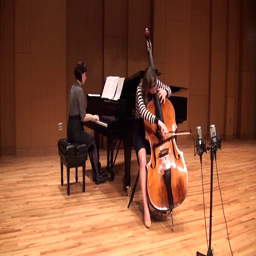
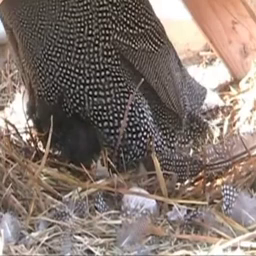
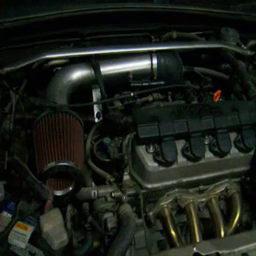
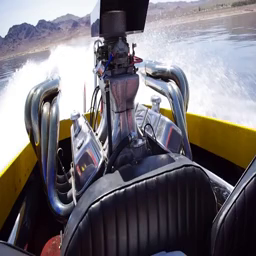
The sound is still added from the text alone. The visual addition needs the reference, because the text does not determine what the object looks like or where it is.
Examples (the same 11 clips are used in 5.3). Same seed with and without the reference.
Add acoustic guitar
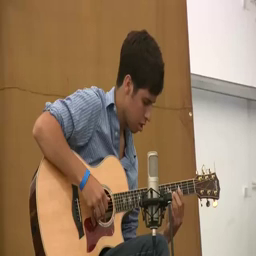
first frame of the target
with the reference
no reference
Add percussion instrument
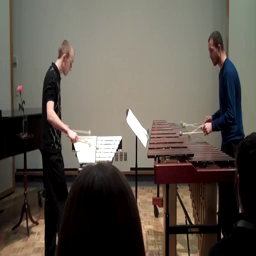
first frame of the target
with the reference
no reference
Add stringed instrument
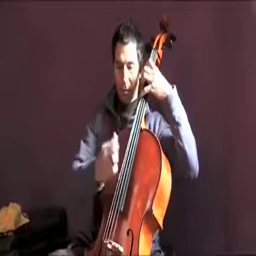
first frame of the target
with the reference
no reference
Add frogs
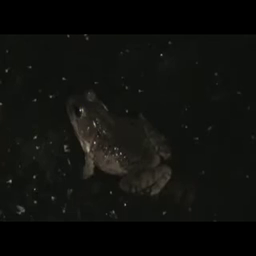
first frame of the target
with the reference
no reference
Add male voice
first frame of the target
with the reference
no reference
Add birds

first frame of the target
with the reference
no reference
Add guinea fowl
first frame of the target
with the reference
no reference
Add vehicle engine
first frame of the target
with the reference
no reference
Add birds

first frame of the target
with the reference
no reference
Add engine
first frame of the target
with the reference
no reference
Add birds

first frame of the target
with the reference
no reference
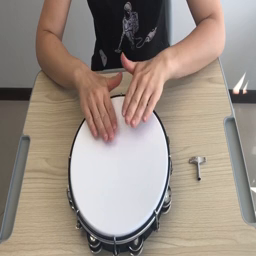
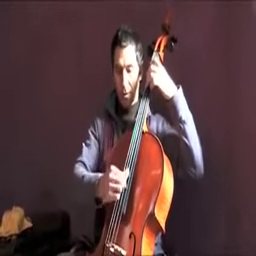
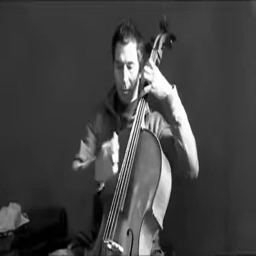
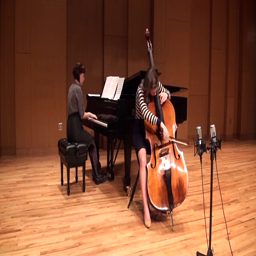
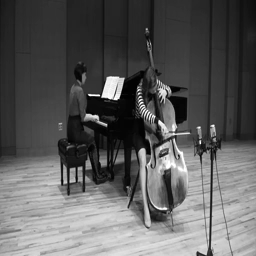
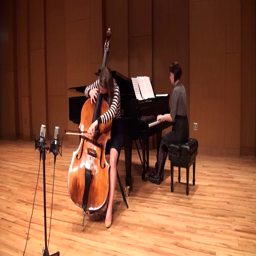
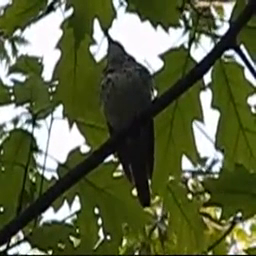
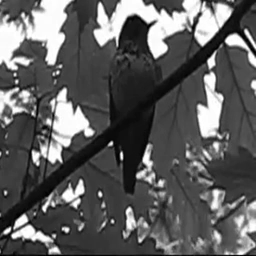
5.3 Imperfect reference frames
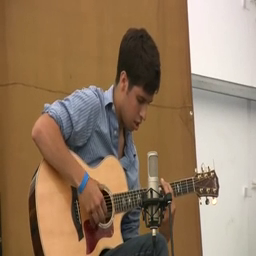
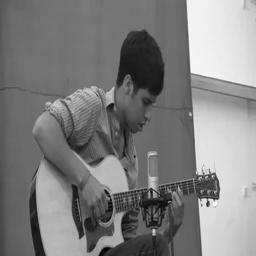
On 11 test clips we replaced the reference frame with a modified one and kept everything else fixed (same seed).
| reference given to the model | what happens |
|---|---|
| exact first frame | the object is added |
| a frame from a later moment (4.5 s) | works almost as well as the exact first frame |
| grayscale | the object is added in some clips; colour returns within about a second |
| JPEG at quality 5, blur, 16×16 up-sampled | the object degrades or disappears |
| mirrored frame | the layout returns to the source and the object fades |
| first frame of a different clip | fails |
A reference that keeps the object identifiable and in place works; heavily damaged frames fail.
Examples. Top: the reference frame given to the model. Bottom: our output. Same seed in every column.
N1 Add acoustic guitar
— reference given (top) and our output (bottom) for each variant

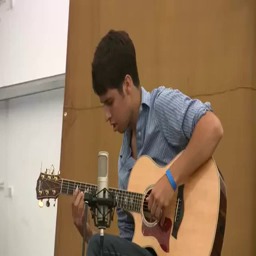

N2 Add percussion instrument
— reference given (top) and our output (bottom) for each variant
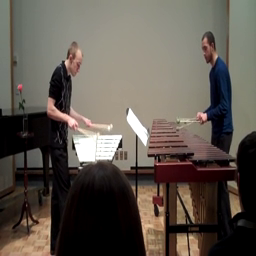
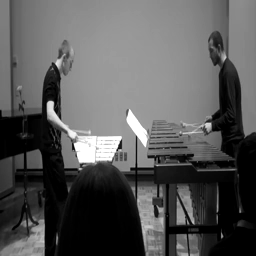



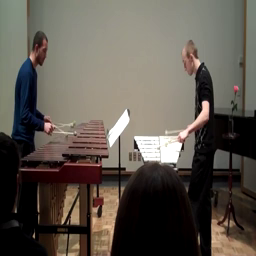
N3 Add stringed instrument
— reference given (top) and our output (bottom) for each variant
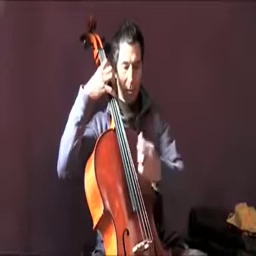
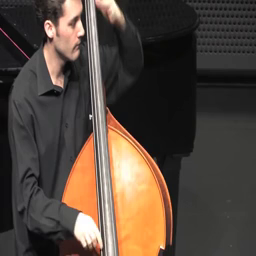
N4 Add frogs
— reference given (top) and our output (bottom) for each variant
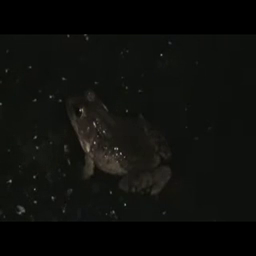


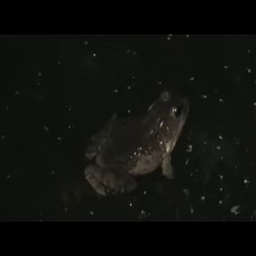
N5 Add male voice
— reference given (top) and our output (bottom) for each variant

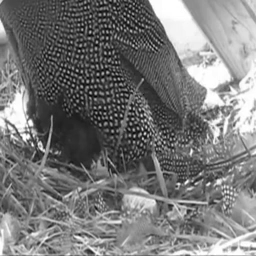
N6 Add birds
— reference given (top) and our output (bottom) for each variant


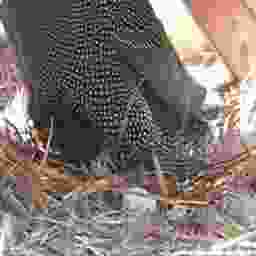
N7 Add guinea fowl
— reference given (top) and our output (bottom) for each variant
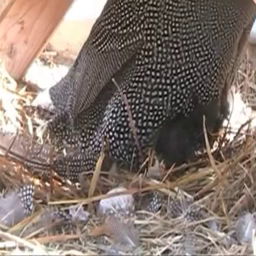
N8 Add vehicle engine
— reference given (top) and our output (bottom) for each variant
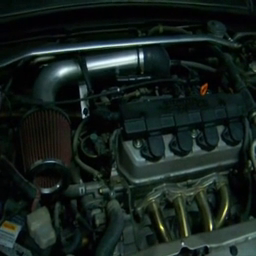
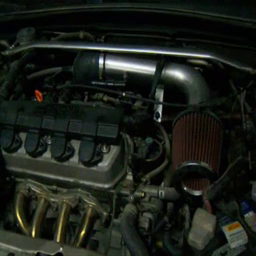
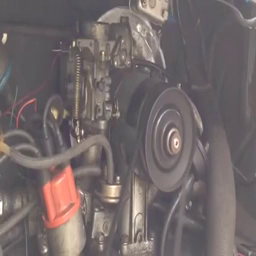
N9 Add birds
— reference given (top) and our output (bottom) for each variant

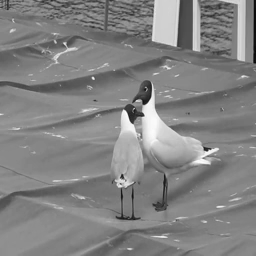




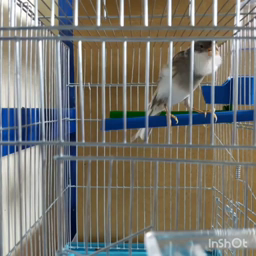
N10 Add engine
— reference given (top) and our output (bottom) for each variant

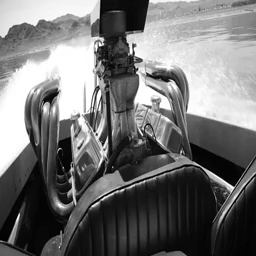


N11 Add birds
— reference given (top) and our output (bottom) for each variant






6. Zero-shot performance hmxL W3 · Rmu9 Q2
The paper checkpoint is run without any retraining on data outside AVIOBench. The clips in 6.1 and 6.2 come from an external pool (AV-SFT). Their YouTube ids appear in no AVIOBench split (train, validation or test), and the clips are not inpainted or edited in any way. The clips in 6.3 are source clips of JAVEdit-100k.
6.1 Removal on real videos
No reference frame. Prompt: a video without {object}.
Remove dog
real video, original audio
text only
the dog is removed, the toy and the window are kept; the audio level drops by 12.8 dB
Remove frog
real video, original audio
text only
the frog is removed, the pond is preserved; the audio level drops by 5.3 dB
Remove rooster
real video, original audio
text only
the rooster is removed, the ground is filled plausibly
Remove train
real video, original audio
text only
the whole train is removed, rails and background are filled plausibly
Removal works when the object is compact and the background is simple.
6.2 Addition on real videos
In the paper, the addition source is an inpainted video and the reference frame is taken from the target video. Here neither is true.
- Source video. A real external clip with its original audio.
- Reference frame. An independent image editor (GPT image editing) receives the first frame of the real clip and the instruction “add one {object} in the foreground”. The object name is chosen by the same model from a fixed list of sounding objects, given only the frame. The editor never sees any AVIOBench data. No target video exists.
- Model. The paper checkpoint with the main inference settings. Prompt:
a video with {object}.
| Examples: real source video | edited first frame given to the model | our output (with audio). |
Add birds
real video, original audio

first frame edited by an image editor
text + edited first frame
a bird flies across the sky in front of the cliff; the sea is preserved
Add car
real video, original audio
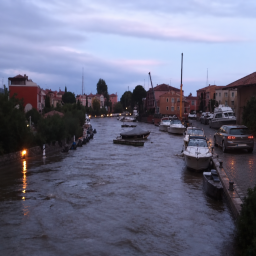
first frame edited by an image editor
text + edited first frame
the car stays on the quay next to the canal; boats, water and lights are preserved
Add dog
real video, original audio

first frame edited by an image editor
text + edited first frame
the dog stays on the shore for the whole clip while the waves keep moving; the sea is preserved
Add dog
real video, original audio
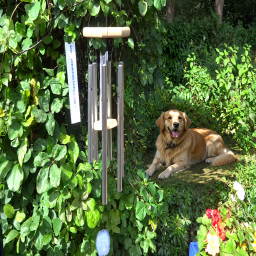
first frame edited by an image editor
text + edited first frame
the dog stays next to the wind chimes and a bark is added to the original chime sound
6.3 JAVEdit-100k
Source clips from the subject-removal part of JAVEdit-100k [2]. No reference frame. The object name is taken from the JAVEdit instruction and inserted into our prompt, a video without {object}.
Remove person
JAVEdit-100k source clip
text only
JAVEdit instruction: "Remove the person jogging on the pathway and eliminate the sounds of their footsteps and breathing."
the jogger is removed for the whole clip; the lit garden path is preserved
Remove person
JAVEdit-100k source clip
text only
JAVEdit instruction: "Remove the person from the video."
the person is removed; the filled region is blurred
Remove saxophone player
JAVEdit-100k source clip
text only
JAVEdit instruction: "Remove the person playing the saxophone and the instrument from the video."
the player and the instrument are removed; the background lights are preserved
7. InstructAV2AV fine-tuned on our data r1hr W3 · hmxL Q3 · Rmu9 W2, Q1
We fine-tuned InstructAV2AV [1] on the AVIOBench training split, starting from its released checkpoint. It is fine-tuned separately for removal and for addition, which gives two specialist models (152 + 151 = 303 H100-hours). Ours is one model for both tasks (359 H100-hours). Both are evaluated on the same 200 test clips.
Human core success (11 clips per task; 50 ratings on removal, 44 on addition):
| core success % [95 % CI] | Ours (one model) | InstructAV2AV fine-tuned (two models) | paired difference |
|---|---|---|---|
| removal | 14.0 [2, 27] | 20.0 [4, 40] | −6.0 pp [−17.7, +7.7], not significant |
| addition | 40.9 [23, 57] | 45.5 [20, 70] | −4.5 pp [−34.1, +27.3], not significant |
Raters find that ours preserves the other sounds better in removal (86 % vs 70 %, +16 pp [+2, +32]).
The raters also scored a third system on the same clips: a cascade that keeps our video and replaces the audio with the output of CoherentAVEdit fine-tuned on AVIOBench. Its core success is 20.0 % [4, 37] on removal and 43.2 % [25, 61] on addition, in the same range as the two systems above.
Objective metrics (against the pseudo-target):
| removal: Ours | removal: fine-tuned | addition: Ours | addition: fine-tuned | |
|---|---|---|---|---|
| video: PSNR ↑ | 20.04 | 21.15 | 18.79 | 17.44 |
| video: SSIM ↑ | 0.655 | 0.715 | 0.619 | 0.622 |
| video: LPIPS ↓ | 0.282 | 0.237 | 0.228 | 0.256 |
| video: FVD ↓ | 482.8 | 274.5 | 610.9 | 373.9 |
| audio: FAD ↓ | 2.91 | 2.54 | 4.29 | 4.09 |
| audio: KL ↓ | 1.49 | 1.59 | 1.41 | 1.79 |
| audio: LSD ↓ | 12.84 | 17.31 | 11.64 | 16.73 |
Performance is comparable. Ours is better on KL and LSD on both tasks and on addition PSNR and LPIPS; the fine-tuned baseline is better on removal video, FVD and FAD. The advantage of our model is that one set of weights handles both removal and addition, with or without a reference frame, while InstructAV2AV provides a dedicated checkpoint for each type of edit, with separate ones for insertion and removal. One checkpoint is preferable because each training pair supervises both directions, so an object and its sound are learned once and serve both tasks, and because only one model has to be trained, stored and run.
Fine-tuning also shows the value of the dataset: under the updated judge it raises InstructAV2AV’s visual removal rate from 24.0 % to 47.2 %.
8. Prompts given to each method hmxL Q3
Every method receives the same object name for a clip, in that method’s own input format. No prompt is tuned per clip.
| method | removal prompt | addition prompt | other inputs |
|---|---|---|---|
| Ours | a video without {object} |
a video with {object} |
source video and audio; first frame for addition |
| CoherentAVEdit | a video without {object} |
a video with {object} |
pseudo-target video (it edits the audio only) |
| AVI-Edit | a video without {object} |
a video with {object} |
object mask; pseudo-target audio |
| InstructAV2AV (released and fine-tuned) | Remove the {object}. |
Add the {object}. |
source video and audio; first frame for addition |
InstructAV2AV is an instruction-following model, so it receives the same content phrased as an instruction. The AVI-Edit paper does not prescribe a removal prompt; on 16 clips we also tried the example prompt shown in its paper together with a box mask, and the ranking did not change.
9. Split by YouTube id; rare and unseen objects r1hr W3
YouTube identity. We split the data by 5-second segment, not by source video, so two different segments of the same YouTube video can fall in train and in test. No segment appears in two splits, but 162 of the 1,425 test clips (11.4 %) come from a video that also has a different segment in train.
We re-evaluated every system on the 1,254 test clips whose source video appears in neither train nor validation. No metric moves by more than 0.1 FAD, 0.12 dB PSNR or 1.0 pp core success, and no ranking changes. Our model is not better on the 162 overlapping clips than on the rest (core success 1.2 % vs 0.9 % on removal, 4.9 % vs 5.6 % on addition). We will report the results on the 1,254 clips and release the benchmark with a split by YouTube id.
Rare and unseen objects. Test clips grouped by how often their object occurs in training (1,713 distinct object names in train). Ours, updated judge, % of clips:
| never seen (78 clips) | 1–5 times (88) | 6–50 times (250) | > 50 times (1,009) | |
|---|---|---|---|---|
| removal: object removed visually | 41.0 | 43.2 | 36.4 | 38.8 |
| removal: sound removed | 14.1 | 19.3 | 17.6 | 16.2 |
| addition: object added visually | 17.9 | 11.4 | 19.2 | 14.7 |
| addition: sound added | 50.0 | 27.3 | 34.0 | 38.0 |
Our model performs similarly on rare, unseen and frequent objects. Train and test share the same object categories, so we do not claim generalisation to unseen categories.
10. Other prompts Rmu9 W4
The model is trained with a single template, a video with {object} / a video without {object}. Here the paper checkpoint is run, without retraining, with three phrasings it never saw in training. Everything else is unchanged (same 40 test clips, same seeds, same reference frames for addition).
| phrasing | removal prompt | addition prompt |
|---|---|---|
| training template | a video without {object} |
a video with {object} |
| instruction | Remove the {object}. |
Add the {object}. |
| descriptive sentence | the same scene, but the {object} is gone and can no longer be heard |
the same scene, now with {object} that can be seen and heard |
| paraphrase | a clip in which there is no {object} |
a clip that includes {object} |
Results under the updated judge (40 clips, % of clips):
| phrasing | removal: object removed | removal: sound removed | removal: other sounds preserved | addition: object added | addition: sound added | addition: other sounds preserved |
|---|---|---|---|---|---|---|
| training template | 35.0 | 7.5 | 77.5 | 12.5 | 35.0 | 90.0 |
| instruction | 22.5 | 7.5 | 92.5 | 7.5 | 35.0 | 90.0 |
| descriptive sentence | 30.0 | 10.0 | 77.5 | 10.0 | 40.0 | 87.5 |
| paraphrase | 30.0 | 5.0 | 80.0 | 12.5 | 42.5 | 87.5 |
The unseen phrasings behave close to the training template. The object name carries the edit; the surrounding wording matters little.
Examples. Same clip, same seed and (for addition) same reference frame; only the prompt changes.
Remove birds
“a video without birds”
“Remove the birds.”
“the same scene, but the birds is gone and can no longer be heard”
“a clip in which there is no birds”
Remove vehicle
“a video without vehicle”
“Remove the vehicle.”
“the same scene, but the vehicle is gone and can no longer be heard”
“a clip in which there is no vehicle”
Remove birds
“a video without birds”
“Remove the birds.”
“the same scene, but the birds is gone and can no longer be heard”
“a clip in which there is no birds”
Add frogs
“a video with frogs”
“Add the frogs.”
“the same scene, now with frogs that can be seen and heard”
“a clip that includes frogs”
Add piano
“a video with piano”
“Add the piano.”
“the same scene, now with piano that can be seen and heard”
“a clip that includes piano”
Add vehicle engine
“a video with vehicle engine”
“Add the vehicle engine.”
“the same scene, now with vehicle engine that can be seen and heard”
“a clip that includes vehicle engine”
11. Backbone Rmu9 Q3
The design is not tied to JavisDiT++. Source-conditioned modulation acts through the normalization layers, and the reference frame enters through the input sequence. Larger audiovisual diffusion transformers such as LTX-2 have both, so the method can be applied to them. Because of resource constraints we tested it on JavisDiT++, a lightweight joint audio-video backbone: our model has 2.26 B parameters and trains in 359 H100-hours. The paper will state that the results are demonstrated on JavisDiT++ and that applying the design to larger backbones is the next step.
What the experiments on JavisDiT++ show about the mechanism itself (Section 4): replacing source-conditioned modulation with cross-attention lowers background preservation by 42.5 pp on addition and 25.0 pp on removal, and removing the reference frame lowers visual addition by 17.5 pp. One backbone supports inputs with and without a reference and both tasks.
References
[1] Zheng et al., InstructAV2AV: Instruction-Guided Audio-Video Joint Editing, arXiv:2605.18467.
[2] Chen et al., JAVEdit: Joint Audio-Visual Instruction-Guided Video Editing with Agentic Data Curation, arXiv:2606.03168.
[3] Shi et al., SAM Audio: Segment Anything in Audio, arXiv:2512.18099.
[4] Ishii et al., Coherent Audio-Visual Editing via Conditional Audio Generation Following Video Edits, arXiv:2512.07209.
[5] Wang et al., AUDIT: Audio Editing by Following Instructions with Latent Diffusion Models, NeurIPS 2023.
[6] Manor and Michaeli, Zero-Shot Unsupervised and Text-Based Audio Editing Using DDPM Inversion, ICML 2024.
[7] Ditto, arXiv:2510.15742.
1Dataset
Each pair is built from one real clip: the named object is segmented with a text-prompted video segmenter and inpainted out, and its sound is separated out of the soundtrack. A pair is used in both directions — original → edited for removal, edited → original for addition. 24,444 training / 1,389 validation / 1,425 test pairs; the test set covers 374 object descriptions.
Object: flute
object present
text-prompted segmentation
object inpainted out, its sound separated out
Object: brass instrument
object present
text-prompted segmentation
object inpainted out, its sound separated out
Object: train engine
object present
text-prompted segmentation
object inpainted out, its sound separated out
Object: birds chirping
object present
text-prompted segmentation
object inpainted out, its sound separated out
Object: animal
object present
text-prompted segmentation
object inpainted out, its sound separated out
Object: white-tailed eagle
object present
text-prompted segmentation
object inpainted out, its sound separated out
Object: individual
object present
text-prompted segmentation
object inpainted out, its sound separated out
Object: helicopter
object present
text-prompted segmentation
object inpainted out, its sound separated out
2Best results
Our model edits the picture and the soundtrack jointly. "Best" refers to the edit itself: in these clips the object named in the prompt and its sound are both removed or added, and the edit holds for the whole clip. The outputs can still show blur and deformation, which we state as a limitation. These showcase clips reappear in the baseline comparisons of sections 3 and 4 under the same tags.
2.1Text-guided removal
Text prompt only. The object is clearly visible and audible in the input and is gone from both the picture and the soundtrack in our output.
Remove brass instrument
text only
Remove birds chirping
text only
Remove animal
text only
Remove individual
text only
Remove dogs
text only
2.2Text + first-frame addition
Text prompt plus the first frame of the target. The input contains neither the object nor its sound; our output adds both, in sync.
Add flute
text + first frame
Add train engine
text + first frame
Add running water
text + first frame
Add white-tailed eagle
text + first frame
Add helicopter
text + first frame
3Comparison with unimodal editing baselines
Unimodal editors change one modality and leave the other untouched, and none of them supports addition, so this comparison is on removal (clips R1–R5). Each baseline is judged in its own modality; one cascade of a video editor and an audio editor follows.
3.1Video-only baselines
ROSE, VideoPainter and LGVI edit the picture only. All clips in this block are silent, so only the visual edit is compared.
Remove brass instrument
video-only
video-only
video-only
joint, text only
Remove birds chirping
video-only
video-only
video-only
joint, text only
Remove animal
video-only
video-only
video-only
joint, text only
Remove individual
video-only
video-only
video-only
joint, text only
Remove dogs
video-only
video-only
video-only
joint, text only
3.2Audio-only baselines
ZEUS and AUDIT edit the soundtrack only. Audio players only, so only the audio edit is compared.
Remove brass instrument
audio-only
audio-only
joint, text only
Remove birds chirping
audio-only
audio-only
joint, text only
Remove animal
audio-only
audio-only
joint, text only
Remove individual
audio-only
audio-only
joint, text only
Remove dogs
audio-only
audio-only
joint, text only
3.3Cascade: ROSE + ZEUS
The video edited by ROSE combined with the audio edited by ZEUS — two independent models, neither aware of the other's edit.
Remove brass instrument
video by ROSE, audio by ZEUS
joint, text only
Remove birds chirping
video by ROSE, audio by ZEUS
joint, text only
Remove animal
video by ROSE, audio by ZEUS
joint, text only
Remove individual
video by ROSE, audio by ZEUS
joint, text only
Remove dogs
video by ROSE, audio by ZEUS
joint, text only
4Comparison with joint audio-visual editing baselines
InstructAV2AV and ours generate both streams. AVI-Edit generates the video and is given the target audio track; CoherentAVEdit generates the audio and is given the edited video.
4.1Removal
Clips R1–R5. All methods receive the input clip and the text prompt.
Remove brass instrument
generates both streams
generates the video; audio track is given
generates the audio; edited video is given
generates both streams
Remove birds chirping
generates both streams
generates the video; audio track is given
generates the audio; edited video is given
generates both streams
Remove animal
generates both streams
generates the video; audio track is given
generates the audio; edited video is given
generates both streams
Remove individual
generates both streams
generates the video; audio track is given
generates the audio; edited video is given
generates both streams
Remove dogs
generates both streams
generates the video; audio track is given
generates the audio; edited video is given
generates both streams
4.2Addition
Clips A1–A5. Every method that generates video is additionally given the first frame of the target.
Add flute
generates both streams
generates the video; audio track is given
generates the audio; edited video is given
generates both streams
Add train engine
generates both streams
generates the video; audio track is given
generates the audio; edited video is given
generates both streams
Add running water
generates both streams
generates the video; audio track is given
generates the audio; edited video is given
generates both streams
Add white-tailed eagle
generates both streams
generates the video; audio track is given
generates the audio; edited video is given
generates both streams
Add helicopter
generates both streams
generates the video; audio track is given
generates the audio; edited video is given
generates both streams
5More examples
Further results of our model, selected automatically: an audio-visual judge (a multimodal LLM) must confirm the edit in the video, in the audio, and their synchronisation.
5.1Removal
Text prompt only (R6–R29).
Remove birds
text only
Remove engine
text only
Remove a person
text only
Remove high-revving engine
text only
Remove birds
text only
Remove birds
text only
Remove birds
text only
Remove trumpets
text only
Remove running water
text only
Remove birds
text only
Remove knife
text only
Remove clarinet
text only
Remove chirping birds
text only
Remove birds
text only
Remove gunshots
text only
Remove birds
text only
Remove animal
text only
Remove dishes
text only
Remove owl
text only
Remove worker
text only
Remove idling engine
text only
Remove livestock
text only
Remove birds
text only
Remove man
text only
5.2Addition
Text prompt plus first frame (A6–A30).
Add didgeridoo
text + first frame
Add didgeridoo
text + first frame
Add clarinet
text + first frame
Add birds
text + first frame
Add bass guitar
text + first frame
Add pianist
text + first frame
Add male performer
text + first frame
Add accordion
text + first frame
Add person
text + first frame
Add drum kit
text + first frame
Add saxophonist
text + first frame
Add bald man
text + first frame
Add individual
text + first frame
Add birds
text + first frame
Add birds
text + first frame
Add birds
text + first frame
Add individual
text + first frame
Add cow
text + first frame
Add birds
text + first frame
Add crowd
text + first frame
Add brass instrument
text + first frame
Add birds
text + first frame
Add individual
text + first frame
Add individual
text + first frame
Add helicopter
text + first frame
6Failure cases
Typical failures of the dataset and of our model, grouped by type. They were found with the audio-visual judge, which is asked whether the object is visible, whether it is audible, and whether sound and picture are in sync; its explanation is quoted under each example.
6.1Dataset failures
Errors in how the pairs were built; they bound what any model trained or scored on this data can reach.
6.1.1Sound separation leaves the object audible
The separated soundtrack of the edited clip still contains the object's sound.
Object: idling engine
object present
removal target / addition input
Judge: The idling engine sound is audibly present and remains consistent without interruption across the clip.
Object: drumming
object present
removal target / addition input
Judge: The sound of drumming is clearly audible and remains consistent throughout the clip.
6.1.2Inpainting leaves the object (or a remnant) visible
The inpainted picture of the edited clip still shows the object or a recognisable remnant.
Object: truck engine
object present
removal target / addition input
Judge: The engine is clearly visible and remains consistent in its appearance and operation across the entire clip.
Object: toilet
object present
removal target / addition input
Judge: The toilet is consistently visible as the camera pulls back and focuses.
6.1.3The named object is heard but never seen in the original clip
The prompt names a sound source that is off-screen, or does not match what the picture shows.
Object: motorcycle engine
object present
removal target / addition input
Judge: The video shows a car engine, not a motorcycle engine; the target is entirely missing.
Object: engine
object present
removal target / addition input
Judge: The target engine is not visually present at any point in the clip.
6.2Removal failures
Our model, text prompt only, on clips whose input clearly shows and sounds the object.
6.2.1The object is left in place
The output is close to the input: the object is still fully visible.
Remove truck engine
text only
Judge: The engine remains visible throughout the entire clip.
Remove toilet
text only
Judge: The target object (toilet) remains visible as a close-up surface for the entire duration.
6.2.2A ghost or blurred remnant stays behind
The object is only partly erased and leaves a blurred or ghost-like shape.
Remove train
text only
Judge: A massive, moving artifact retaining the shape and color of the train is visible for the entire clip.
Remove train
text only
Judge: A large, moving ghost image of the train remains visible on the tracks for the entire clip.
6.2.3The object leaves the picture but its sound stays
The visual removal succeeds while the soundtrack keeps the object's sound, although the reference audio is clean.
Remove electronic device
text only
Judge: The buzzing sound of the electronic device remains clearly audible for the entire duration.
Remove motorcycle engine
text only
Judge: The sound of a motorcycle engine is clearly audible continuously from the beginning to the end of the clip.
6.3Addition failures
Our model, text prompt plus first frame, on clips whose input has neither the object nor its sound.
6.3.1The object drifts away from the first frame (identity or shape changes)
The object starts from the given first frame but its shape or identity changes over time.
Add cargo ship
text + first frame
Judge: The ship structure is highly distorted and morphs continuously, lacking consistency.
Add animal
text + first frame
Judge: The animal severely distorts and loses its initial identity, becoming an unrecognizable shape starting around 0.5s.
6.3.2The object fades out after the first frame
The object is present at the first frame and then disappears.
Add male vocalist
text + first frame
Judge: No singing action is visible, and the person's head disappears entirely at 00:01.000.
Add canine
text + first frame
Judge: The dog arbitrarily disappears and blends into the floor texture at 00:01.000 and 00:04.000.
6.3.3Object and sound are both added, but out of sync
Both streams contain the object, but sound events do not line up with the visible action.
Add barking dog
text + first frame
Judge: The audible barks do not match the visible actions of the dog, which appears to be sniffing or eating rather than barking, especially noticeable around 00:03 and 00:04.
Add rooster
text + first frame
Judge: The rooster crowing sound occurs between 00:01.8 and 00:03.0, but the visible rooster's beak remains closed and it does not perform the physical action of crowing.